Most school elevator emergency phone work is a modernization, not a new build. The elevators are on long replacement cycles, the buildings span sixty years of construction, and the district IT department does not want another cellular or cloud device sitting on the school network.
School and district IT teams are, correctly, hostile to unmanaged devices on their network. A cloud-hosted elevator phone introduces an outbound dependency and a third party data path, and on a network that carries student information that is a conversation nobody wants to have twice.
An on-premises system removes the question. The PBX sits in your building, the calls stay inside your infrastructure, and there is no external service in the path to assess, document or defend at review. The equipment is bought once and owned outright. It does not stop working because a contract lapsed or a vendor changed its hosting arrangements.
That matters more in schools than most places. Buildings are held for decades and elevators are replaced on long cycles. Equipment you own and can service ages better than an arrangement you rent.
Elevator emergency calls must be answered by trained personnel who can take action. ASME A17.1 is performance based here. It requires the call reach a location staffed by authorized personnel who can take appropriate action, and it does not name a central station, a monitoring company or any third party.
A district with a staffed main office, campus safety desk or security operations center during school hours already has part of that. Outside school hours, and for districts without continuous staffing, calls route off-site to a monitoring provider using the same equipment. What is genuinely ruled out is pointing the elevator phone at a number tied to an individual administrator and calling it done. The Wisconsin Department of Safety and Professional Services said exactly that in its 2023 guidance.
Worth knowing, because it gets argued: the code prohibits an automated answering system. It does not prohibit automated routing. The ASME A17 Standards Committee addressed this in Inquiry 13-1022, approved 11 September 2013. Voicemail is out. A system that rolls an unanswered call to the next authorized person is not. Which arrangement is acceptable is decided by your authority having jurisdiction, and we work through that for your buildings rather than assert a general answer.
The in-car device matters more here than the spec sheet suggests. A displayed message confirming the call connected tells a frightened student something is happening. Text messaging lets your office communicate with a student who cannot speak or hear, and with one who is too panicked to talk. A message that help is on the way buys the minutes it takes to get someone there.
Verifying elevator phones the old way means sending someone to every car to press the button and wait for an answer. Across a district that is days of work, done rarely, and it only proves the phone worked while somebody stood in front of it.
LiftComm supervises the communication path automatically. Every elevator, every 30 seconds. A failed path raises an alert immediately rather than at the next inspection, or worse, when a student is already stuck in the car.
A district typically has a 1960s elementary school, a 1990s middle school, a new athletics building and a bus garage, all with different elevator equipment and often different service contractors. The communication layer does not have to match that fragmentation. One on-premises system covers the whole district with each car identified on the call.
School work happens over summer break, and that calendar is fixed. Our installations are built for it. Where the car operating panel can be opened, the in-panel unit goes in. Where it cannot, the surface mount unit goes on the wall of the car instead, with no panel modification and no waiting on the elevator manufacturer.
Schools carry accessibility obligations beyond the building code, and a building with elevators that cannot be used safely by everyone is a problem before it is a citation. Voice plus visual plus text messaging is what makes the system usable by a student who cannot speak or hear.
Elevator emergency communication is governed by ASME A17.1 and CSA B44, adopted state by state and city by city with local amendments. What applies to your buildings depends on which edition your authority having jurisdiction adopted and when the work is permitted, and current requirements apply to new installations and qualifying alterations rather than retroactively. In New York City the operative document is the NYC Building Code, Appendix K, which modifies ASME A17.1-2013 rather than the 2019 edition. We build to whichever edition governs your building, and we will tell you which one that is. We keep a state by state reference here.
The same equipment runs across 96 MTA stations completed as of 2025, in an environment with heavier use and less forgiving inspection than any school. It also runs in hospitals, airports, government buildings and public housing. See what the code requires of elevator emergency phone systems.
Book a call and we will look at your building inventory, your network requirements, who answers during and after school hours, and what your jurisdiction actually adopted.
Book a callA campus is dozens of buildings, one purchasing decision, and a set of elevators installed across sixty years of construction. It is also one of the few environments where the people answering emergency calls already work for you and already know the building.
Most universities run a campus police or public safety dispatch center staffed around the clock, in the same category as hospital security operations centers, airport operations centers, transit control and large government facilities. It is trained, it has escalation procedures, and it already handles the rest of the emergencies on campus.
Routing elevator calls there means a student stuck at 2am reaches someone who knows the residence hall, can send an officer, and is not asking which city they are in. Where dispatch cannot absorb the calls, a monitoring provider covers it and the same system routes there.
Where configured for PSAP operation, the platform can support elevator emergency calls and 911 within the same answering environment rather than through two disconnected processes. A call can be answered, assessed and escalated without the passenger being transferred, put on hold, or dropped between systems.
Elevator phones are rarely the only emergency communication you run. Emergency help points, assistance points at gates, platforms and entrances, blue-light phones, parking structure call boxes. These are often separate systems from separate vendors, each with its own answering arrangement and its own failure modes.
They can be consolidated onto one platform. One place to answer them, one place to monitor them, one place to see what is working.
An office tower elevator gets stuck with an employee in it during business hours. A residence hall elevator gets stuck at 2am with a nineteen-year-old in it, and the university owns the outcome in a way that a landlord does not. Confirmation on the display that the call was received, and that help is on the way, matters more in that building than anywhere else on campus.
Emergency Communication Path Supervision, or ECPS, is the part of this that facilities teams notice first.
Verifying elevator phones used to mean sending someone to every car to press the call button and wait for an answer. In a portfolio of any size that is a day of work, done infrequently, and it only tells you the phone worked at the moment somebody stood in front of it.
LiftComm supervises the communication path automatically. Every elevator, every 30 seconds. If a path fails you get an alert immediately, not at the next inspection and not when a passenger is already stuck in the car.
A campus typically has a 1960s academic building, a 1990s library, a new science building and a parking structure, all with different elevator equipment and often different service contractors. The communication layer does not have to match that fragmentation. One on-premises system covers the whole campus with each car identified on the call.
Campus work happens between commencement and move-in, and that calendar is fixed. Our installations offer flexibility where we can provide an in-unit phone or a surface mounted phone, so the COP does not need to be altered.
How the unit goes in depends on the building. Where the car operating panel can be opened, the standard EAV unit installs into it. Where it cannot, or where the schedule will not allow it, the surface mount version installs without touching the COP. When twisted pairs exist, our two-wire converter can carry network and power, which shortens the work when the calendar is fixed.
Universities carry accessibility obligations beyond the building code, and a campus with elevator phones a deaf student cannot use is a problem long before an inspector raises it. Text and visual communication in the car addresses that directly.
Elevator emergency communication is governed by ASME A17.1 and CSA B44, adopted state by state and city by city with local amendments. What applies to your building depends on which edition your authority having jurisdiction has adopted and on when the work is permitted, and current requirements apply to new installations and qualifying alterations rather than retroactively. In New York City the operative document is the NYC Building Code, Appendix K. We build to whichever edition governs your building, and we will tell you which one that is.
The surface mount unit is optional. It goes in place of the in-panel EAV where the car operating panel cannot be modified.
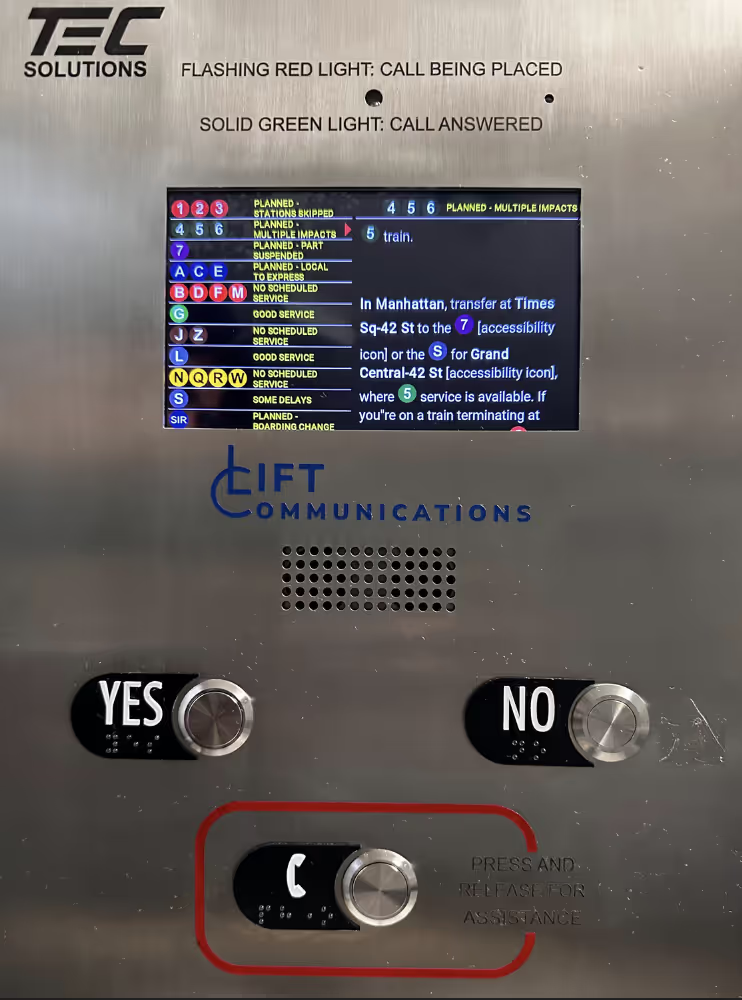 EAV Elevator Phone Series
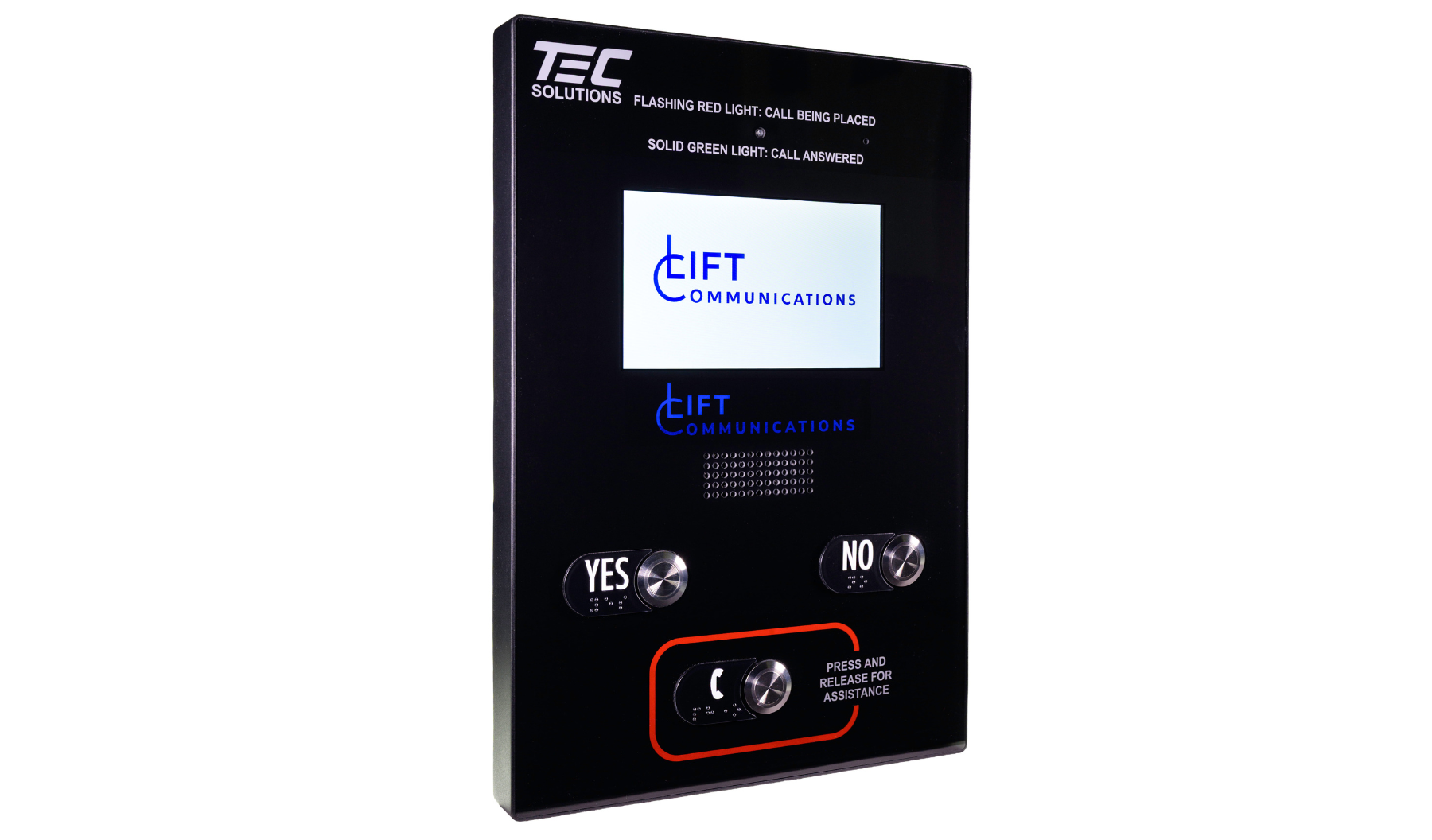 EAV Elevator Phone Surface Mount
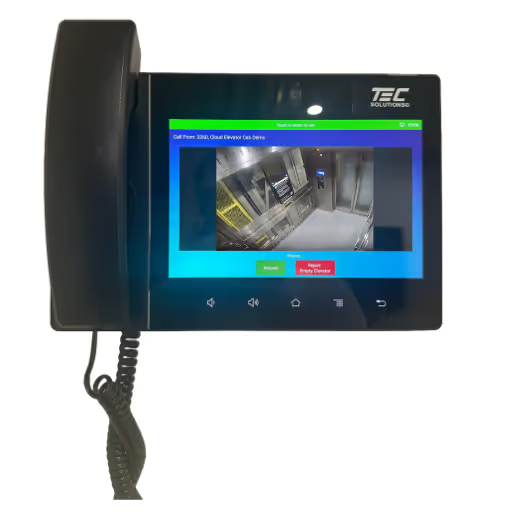 Mechanical Room | Security Desk Phone
.avif) 2Wire Network & POE Converter
2Wire Network & POE Converter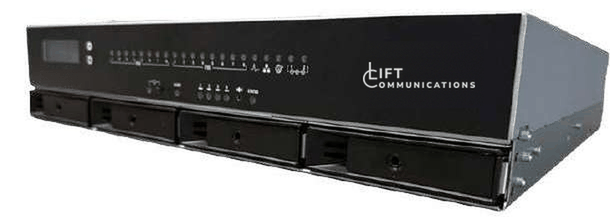 On-Premise PBX & Emergency Elevator Call System
The same equipment runs across 96 MTA stations completed as of 2025, in an environment with far heavier traffic and inspection than any campus building. See the full station record.
Book a call and we will look at your building inventory, your dispatch setup and your installation window.
Book a callLeave us your information and we will get back to you as soon as possible!


Book a personalized demo with our team to explore how our services can meet your unique business needs.
