A housing authority operates more elevators, in harder conditions, with older equipment and more scrutiny than almost any other owner. When a car goes out of service, the people affected are residents who live there, often with no stairs alternative, and the complaint does not stay inside the building.
Elevator phones in public housing take abuse that equipment in a Class A tower never sees. A phone that fails quietly is worse than no phone, because everyone assumes it works until the day someone is stuck. Hardware built for this environment is not a preference here, it is the difference between a system that works in year six and one that does not.
Verifying elevator phones used to mean sending someone to every car to press the call button and wait for an answer. In a portfolio of any size that is a day of work, done infrequently, and it only tells you the phone worked at the moment somebody stood in front of it.
LiftComm supervises the communication path automatically. Every elevator, every 30 seconds. If a path fails you get an alert immediately, not at the next inspection and not when a passenger is already stuck in the car.
In a portfolio with hundreds of cars, that is the difference between discovering a dead phone at inspection and knowing within 30 seconds.
A portfolio with hundreds of cars is a different problem from a building with four. Anything requiring per-building negotiation becomes unmanageable. One on-premises system across the portfolio, with every car identified on the call and one place to manage it, provides a scalable and administrable model for portfolios with hundreds of cars.
Housing authorities answer to residents, to boards, to city agencies and sometimes to press and litigation. Being able to show that a call was received, acknowledged and responded to, with a record, is worth as much as the response itself the first time anyone asks what happened.
Someone has to be able to answer those calls at all times, whether that is an in-house operations center or a monitoring provider. Both work with the same equipment. What matters is that the answering arrangement is real and covered at three in the morning, not that it exists on paper.
Where configured for PSAP operation, the platform can support elevator emergency calls and 911 within the same answering environment rather than through two disconnected processes. A call can be answered, assessed and escalated without the passenger being transferred, put on hold, or dropped between systems.
Elevator phones are rarely the only emergency communication you run. Emergency help points, assistance points at gates, platforms and entrances, blue-light phones, parking structure call boxes. These are often separate systems from separate vendors, each with its own answering arrangement and its own failure modes.
They can be consolidated onto one platform. One place to answer them, one place to monitor them, one place to see what is working.
Residents include people who are deaf or hard of hearing, people who cannot speak, older residents and people with disabilities who depend on the elevator to leave home at all. Text and visual communication in the car is what makes the system usable by the people most likely to need it.
This work happens in buildings full of residents, on capital plans and funding cycles that do not bend. Where the car operating panel can be opened, the standard EAV unit installs into it. Where it cannot, the surface mount version installs without touching the COP. When twisted pairs exist, our two-wire converter can carry network and power, which keeps the work inside the car and out of the corridors.
Elevator emergency communication is governed by ASME A17.1 and CSA B44, adopted state by state and city by city with local amendments. What applies to your building depends on which edition your authority having jurisdiction has adopted and on when the work is permitted, and current requirements apply to new installations and qualifying alterations rather than retroactively. In New York City the operative document is the NYC Building Code, Appendix K. We build to whichever edition governs your building, and we will tell you which one that is.
The surface mount unit is optional. It goes in place of the in-panel EAV where the car operating panel cannot be modified.
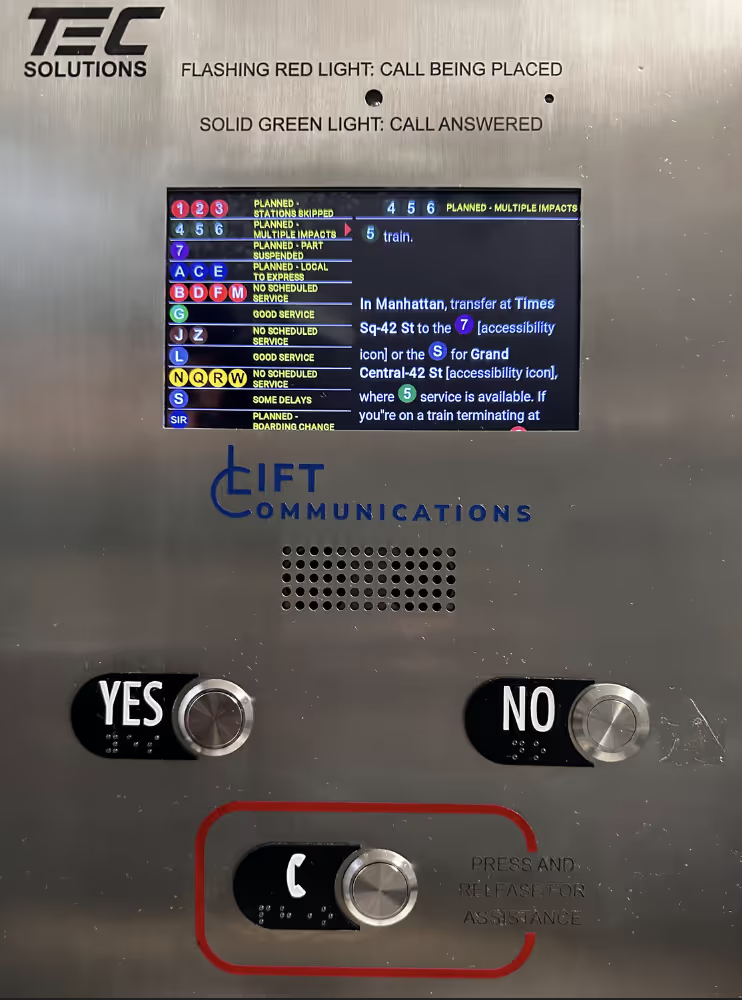 EAV Elevator Phone Series
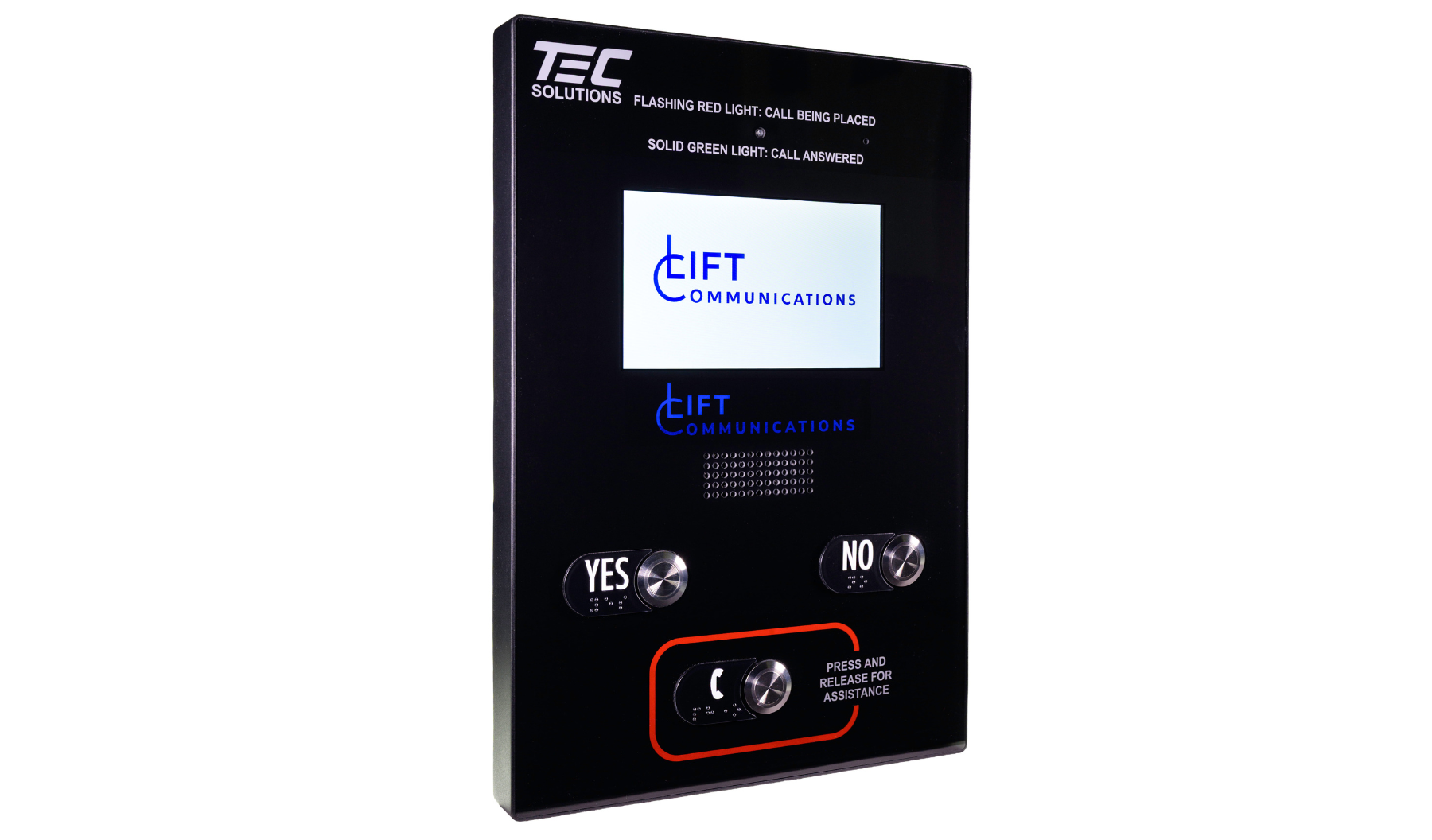 EAV Elevator Phone Surface Mount
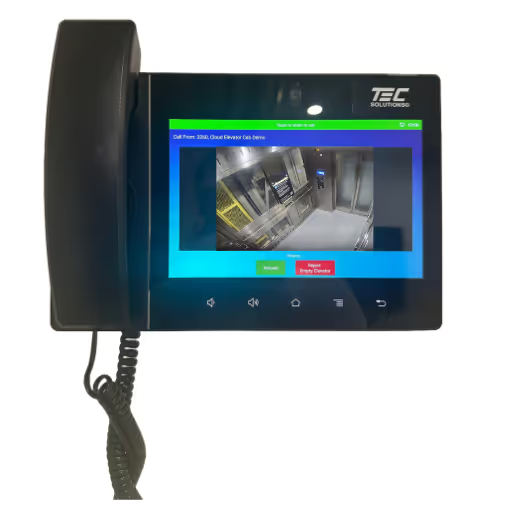 Mechanical Room | Security Desk Phone
.avif) 2Wire Network & POE Converter
2Wire Network & POE Converter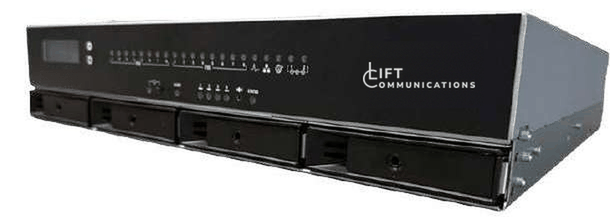 On-Premise PBX & Emergency Elevator Call System
We supply the elevator communication for 96 MTA stations completed as of 2025: the same public procurement, the same public scrutiny, the same hard-use environment, in the same city. See the full station record.
Book a call and we will look at your portfolio, your car count and your capital plan.
Book a callLeave us your information and we will get back to you as soon as possible!


Book a personalized demo with our team to explore how our services can meet your unique business needs.
