A hospital is the hardest building in the portfolio to get this right in. Your elevators carry the whole public, not a filtered slice of it. Your network is segmented on purpose. Your campus is several buildings with several generations of elevator equipment. And you cannot take a car out of service for a week to fix any of it.
An office tower has a fairly narrow population riding its elevators. A hospital has everyone: visitors, outpatients, families, staff, contractors, deliveries, and the full range of ages and abilities that walks through the door on any given day.
That changes the odds on who ends up alone in a stopped car. Someone who is deaf or hard of hearing. Someone with a speech impairment. An older patient on their own after an appointment. A visitor who does not speak English. A member of staff moving a patient on a gurney, with both hands occupied.
A voice-only phone assumes the passenger can hear the operator and speak back clearly. In a hospital that is an assumption you cannot make. Text and visual communication in the car means the call still works when speech does not, and it confirms to any passenger that their call was received, which matters more than people expect. Someone alone in a stopped car with no acknowledgement escalates quickly.
Hospital IT segments networks for good reasons. For facilities operating isolated or highly controlled networks, a cloud-hosted elevator communication system can introduce external dependencies, security review requirements and third-party data paths that an on-premises architecture avoids. With an on-premises system, the PBX is in your building, the calls stay on your network, and there is no outbound dependency to document, justify or renegotiate when your security posture changes.
It also keeps working through an internet outage, which in a hospital is not a hypothetical.
Someone has to be able to answer these calls, always. Most hospitals already run a security operations center staffed around the clock with trained personnel and a defined escalation path, and the same is true of airports, universities, transit systems and large government facilities. Calls answered there reach someone who knows which tower, which bank and which car, and who can send help before the call ends.
If your SOC is not resourced to take them, a monitoring provider covers it and the same equipment routes to them instead. What matters is that the call is answered properly, not who answers it.
Where configured for PSAP operation, the platform can support elevator emergency calls and 911 within the same answering environment rather than through two disconnected processes. A call can be answered, assessed and escalated without the passenger being transferred, put on hold, or dropped between systems.
Emergency Communication Path Supervision, or ECPS, is the part of this that facilities teams notice first.
Verifying elevator phones used to mean sending someone to every car to press the call button and wait for an answer. In a portfolio of any size that is a day of work, done infrequently, and it only tells you the phone worked at the moment somebody stood in front of it.
LiftComm supervises the communication path automatically. Every elevator, every 30 seconds. If a path fails you get an alert immediately, not at the next inspection and not when a passenger is already stuck in the car.
A hospital campus is rarely one building. Several towers, a medical office building, a parking structure, a research wing, different elevator ages, sometimes different service contractors, and a set of monitoring arrangements assembled piecemeal over fifteen years.
One on-premises system covers all of it, with every car identified on the call and one place to manage the estate.
A hospital cannot lose an elevator for long, and some cars cannot come out of service during the day at all. Hospital elevator modernization takes structured planning so operations can keep moving. We offer the flexibility to provide a surface mounted ASME A17.1 2019/2022 elevator phone when replacing the COP cannot be done.
Where the existing car operating panel cannot be modified or replaced, or the modernization schedule will not allow it, the surface mount version installs without touching the COP while supporting the applicable accessibility and ASME A17.1 communication requirements. Where the panel can be opened, the standard EAV unit goes in. Both are on the table, and which one fits is a site decision rather than a product decision.
When twisted pairs exist, our two-wire converter can carry network and power, which avoids pulling new cable through occupied clinical space.
Elevator emergency communication is governed by ASME A17.1 and CSA B44, adopted state by state and city by city with local amendments. What applies to your building depends on which edition your authority having jurisdiction has adopted and on when the work is permitted, and current requirements apply to new installations and qualifying alterations rather than retroactively. In New York City the operative document is the NYC Building Code, Appendix K. We build to whichever edition governs your building, and we will tell you which one that is.
The surface mount unit is optional. It goes in place of the in-panel EAV where the car operating panel cannot be modified.
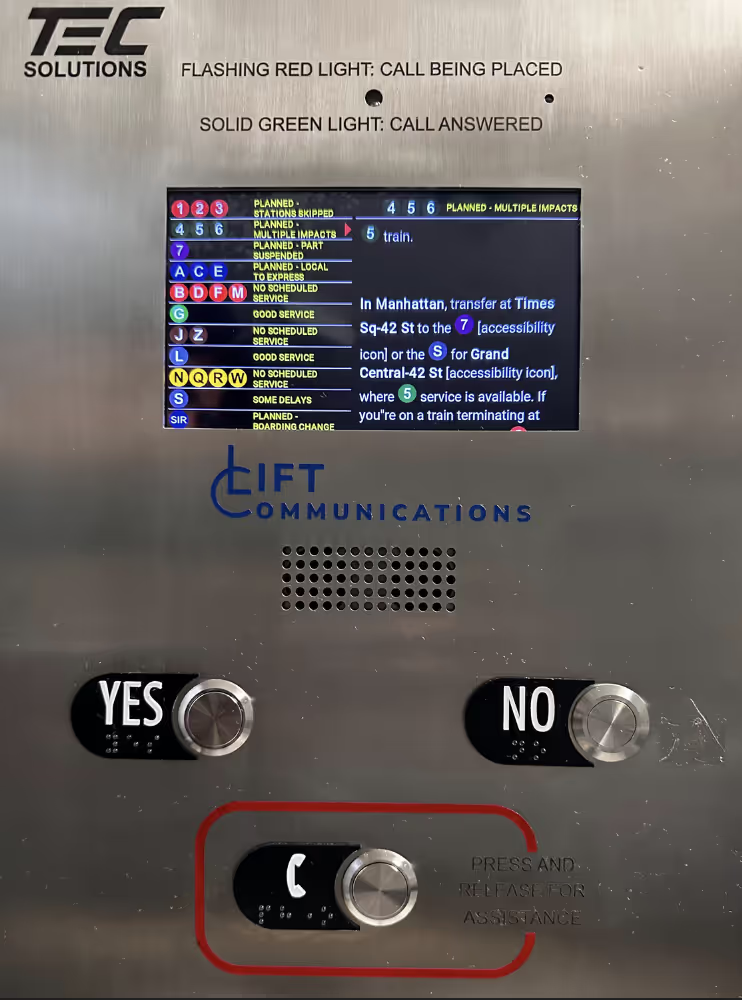 EAV Elevator Phone Series
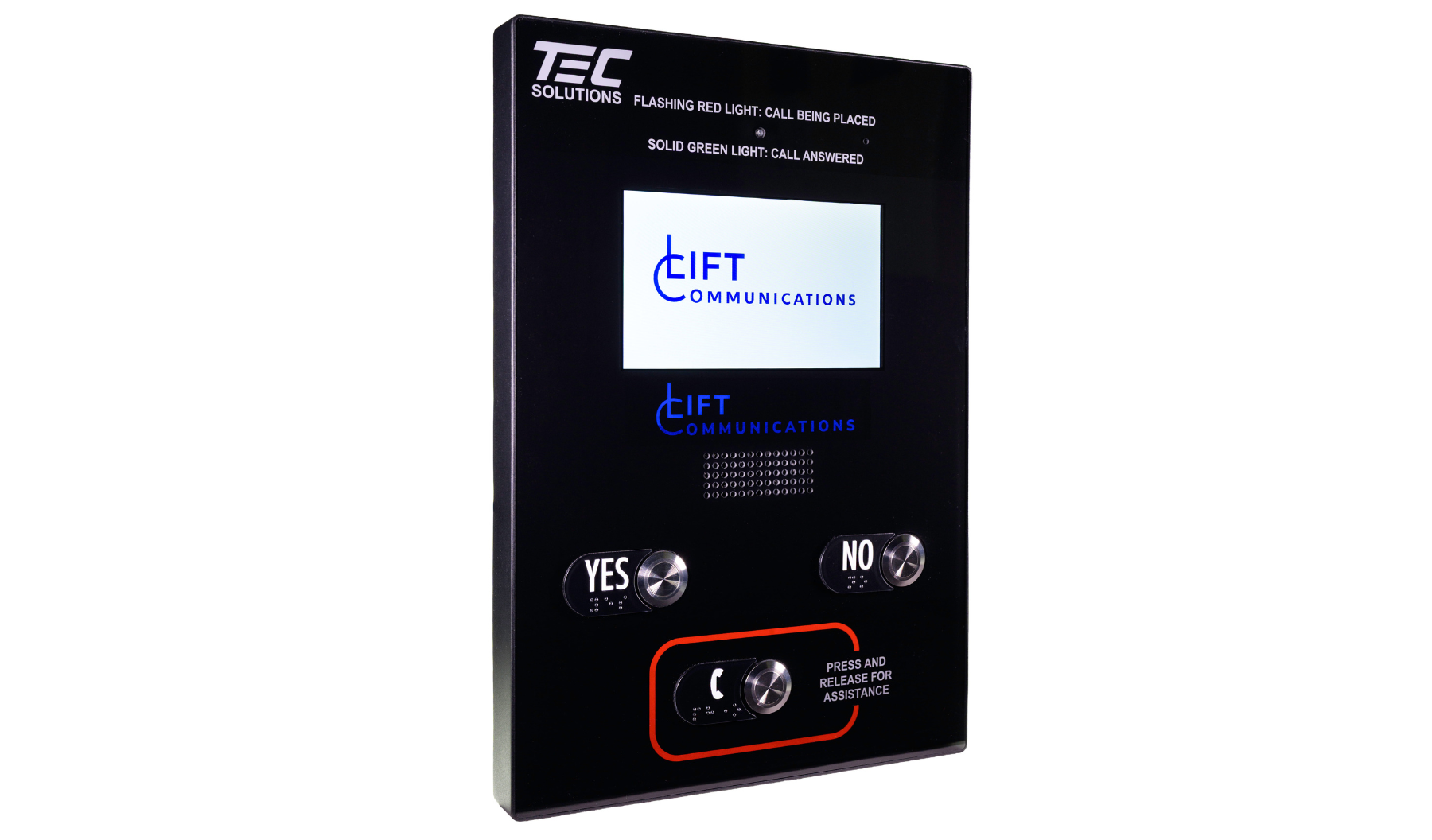 EAV Elevator Phone Surface Mount
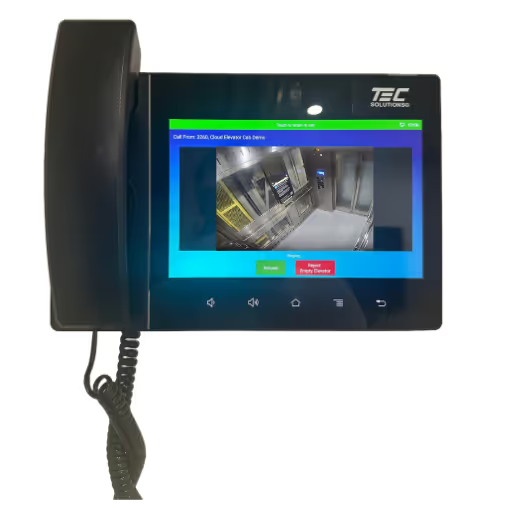 Mechanical Room | Security Desk Phone
.avif) 2Wire Network & POE Converter
2Wire Network & POE Converter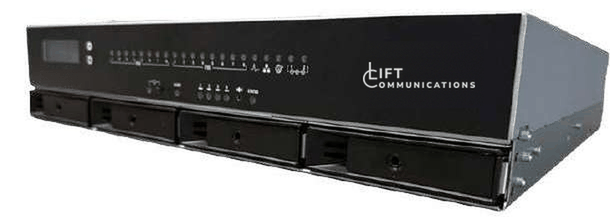 On-Premise PBX & Emergency Elevator Call System
The same systems run across 96 MTA stations completed as of 2025, under public procurement and public scrutiny, in an environment where taking a car out of service is not an option. See the full station record.
Book a call and we will review your campus, your network constraints and your inspection history, and tell you what actually needs changing.
Book a callLeave us your information and we will get back to you as soon as possible!


Book a personalized demo with our team to explore how our services can meet your unique business needs.
