Read more about how Lift Communications helps serve our community
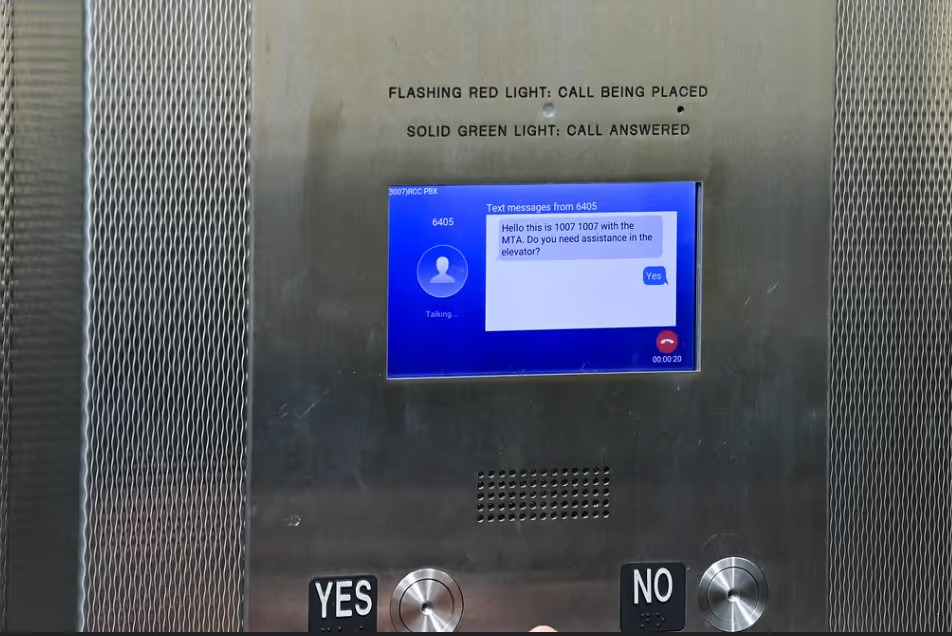
Yes. In the 2019 and 2022 editions, the in-car device must include a means to display video of the car floor so that an entrapment can be assessed.
And here is the part that gets misreported constantly: that requirement has no rise threshold. It does not begin at 60 feet. It does not begin at any height.
If you have been told video only applies to buildings above 60 feet, you have been given a real requirement from the wrong clause.
The confusion comes from reading two adjacent requirements as if they were one. They are not.
Clause 2.27.1.1.3 covers the device in the car. It requires a displayed message confirming communication is established, messages that let authorized personnel communicate with and get responses from a passenger who cannot speak or hear, a message indicating help is on the way, and a means to display video of the car floor for entrapment assessment. There is no height threshold on any of it.
Clause 2.27.1.1.4 is the one with the 60 foot trigger. Where rise is 18 m (60 ft) or more, it requires a communications means inside the building that emergency personnel can use to reach each car. It has nothing to do with video. It exists so responders already in the building can reach each car and take over the line. In the field people call it the firefighter phone. It is not a monitoring point and it does not answer routine entrapment calls.
Somewhere between the code book and the sales deck, the height threshold from one clause got attached to the video requirement from the other. It has been repeated enough that several well known industry sources now state it as fact. It is still wrong.
Taken together, clause 2.27.1.1.3 describes a device that has to work for a passenger who cannot use a normal phone call. That is the underlying intent, and it explains every item on the list.
Read as a set, it is an accessibility requirement as much as an emergency one.
The 45 second rule. If a call is not acknowledged within 45 seconds, clause 2.27.1.1.2 requires it be automatically directed to an alternate on-site or off-site location. The clause does not care why nobody answered.
Backup power. Clause 2.27.1.1.5 requires at least 4 hours for the communications means and 1 hour for the audible signaling device.
None of it is retroactive. These requirements apply to new installations and to alterations that trigger the alteration provisions. They are not retroactive to elevators already in service. An existing communication device can generally stay until it fails. Anyone implying that every building in the country now needs video installed is overstating it, and usually selling something.
Everything above describes A17.1 2019 and 2022. Whether either of them governs your building is a different matter, because adoption is not uniform.
So a building in Buffalo permitted in 2023 and a building in Manhattan permitted this year are held to different documents, and neither of them is the 2019 edition most vendors quote by default. We keep a state by state reference for exactly this reason.
There are two practical consequences.
If you are writing a specification, clause numbers are edition specific. Naming a requirement without naming the edition produces a spec that cannot be enforced and bids that cannot be compared. Say which edition governs and cite from it.
If you are being sold a system, a vendor who repeats the 60 foot video claim is telling you they have not read the clause. That is worth knowing before they price a portfolio for you.
If you are not certain which edition your building is held to, that is the first thing worth settling. It is not always what the last vendor told you. See what the code requires of elevator emergency phone systems.
Leave us your information and we will get back to you as soon as possible!


Book a personalized demo with our team to explore how our services can meet your unique business needs.
