Read more about how Lift Communications helps serve our community
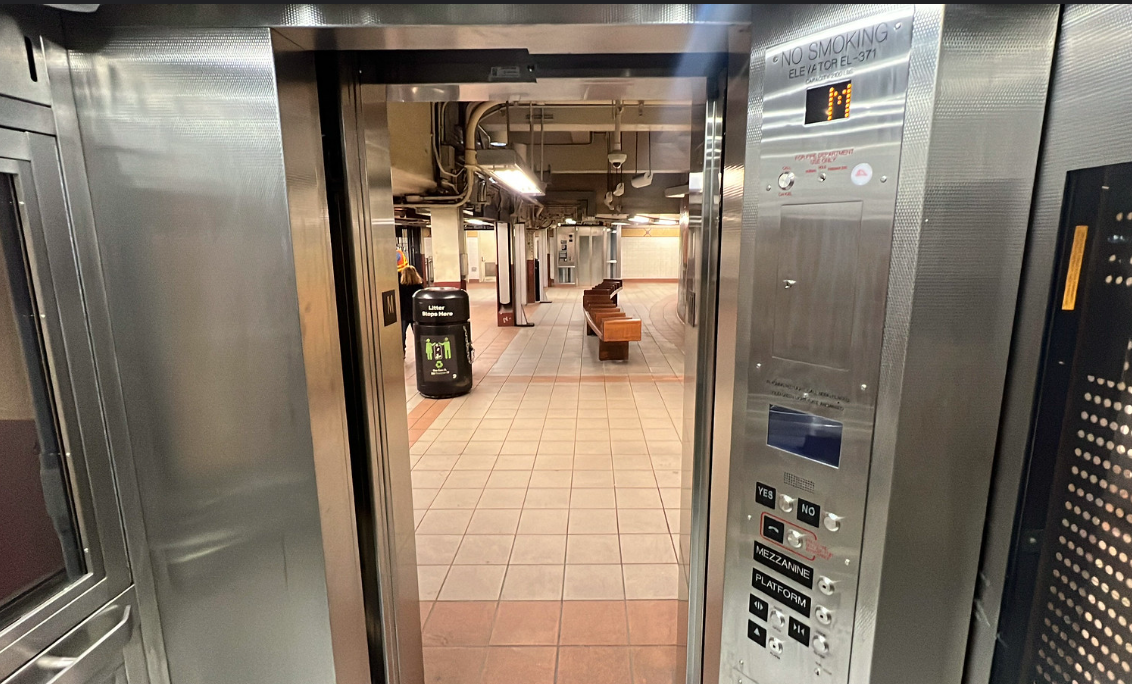
An elevator communication system connects a passenger in the car to a live responder: in-car device, network path, call routing, answering point, and backup power working as one. Here is how it works.
An elevator communication system is everything that has to work together for a person in a stalled elevator to reach a person who can help: the device in the car, the network path out of the hoistway, the routing logic that decides whose phone rings, the answering point where a trained human picks up, and the backup power that keeps all of it alive during an outage. The phone in the cab is just the visible part.
That distinction matters because the current safety code, ASME A17.1-2019 / CSA B44-19, regulates the system, not just the device. Two-way voice, two-way text messaging, video for entrapment assessment, automatic re-routing within 45 seconds, and four hours of standby power are requirements on the whole chain. A compliant phone connected to a fragile network path, or routed to a desk nobody staffs, is not a compliant system.
1. The in-car device.
The passenger-facing endpoint: a push-to-call control marked with the phone symbol, a speaker and microphone for two-way voice, a display for two-way text, and a camera path so responders can see into the cab. In LiftComm systems this is the LC-1300EAV touchscreen phone (or a surface-mount or integration-kit equivalent) paired with an in-car IP camera. Devices for machine rooms and landings, such as rugged handsets and landing intercoms, extend the same system beyond the cab.
2. The network path.
Modern systems are IP systems: the call, the text, and the video travel as network traffic on the building’s own infrastructure, and the in-car device draws its power over the same connection. The moving car connects through the elevator travel cable. A network extender like LiftComm’s LC-2WIRE carries data and power up to 500 meters over a single wire pair, which is what makes modernizations practical without new cable runs.
3. The routing brain.
Something has to decide where each call goes, in what order, and what happens when nobody answers. In a LiftComm system that is the LC-UCM1400, an on-premises communication server in the building’s data room. It holds the routing rules (which desk rings first, where the call goes at the 45-second mark, how a responder conferences 911 into the call) and enforces them automatically, with built-in redundancy and failover. Because it lives on-premises, the routing logic belongs to your team, and the call never leaves your network to reach a vendor’s cloud.
4. The answering point.
Code requires a staffed location: people trained to answer, around the clock. In buildings with a 24/7 security desk or communications center, calls land on a video desk phone like the LC-SC1300, which shows the responder the caller and the cab camera feed in one view. Unstaffed buildings route to a monitoring service instead, and hybrids split the day between the two. For larger operations, a call-center agent panel gives a team of responders shared visibility into every incoming elevator call.
5. Power resilience.
The system must run for at least four hours when building power fails, with the audible signal available for at least one hour, and the switch to backup power has to happen automatically. That requirement covers the whole chain (the in-car device, the network path, and the routing server), not just the phone.
Here is the whole system working, in the order it happens:
ASME A17.1-2019 / CSA B44-19 Section 2.27.1.1.3 sets the in-car requirements: two-way voice communication, two-way text-based messaging for passengers who cannot hear or speak, a video means for entrapment assessment, a marked push-to-call control meeting accessibility requirements, automatic re-routing at 45 seconds, and standby power of four hours for communications and one hour for the audible signal. Section 2.27.1.1.4 adds a building-side communication means, accessible to emergency personnel, for elevators with a rise of 60 feet or more.
Whether the 2019 edition applies to your specific building depends on which edition your jurisdiction has adopted and what work you are performing. The full breakdown is in Do I Need an Elevator Phone in My Building?.
Every component above exists in two architectures. Cloud-hosted systems route the call through the vendor’s external servers: simpler to stand up, but the routing logic, the uptime, and a piece of every life-safety call belong to a third party. In government, transit, healthcare, defense, and other regulated environments, an external dependency like that often fails security review outright.
On-premises systems keep the entire chain (device, network, routing, answering) inside the building’s own infrastructure. Nothing leaves your network, there is no recurring cloud dependency, and the architecture works in air-gapped environments where no external system is permitted. That is the model LiftComm builds, and it is why the platform runs in environments like the MTA’s subway elevator fleet, where cloud elevator phones are not an option.
An elevator call is a security event, and it should land where your security team already looks. LiftComm integrates natively with Genetec Security Center, with automatic video bookmarks at every button press, live camera feeds on the answering phone, and a searchable audit trail by intercom, date, or time. It also ties into access control, CCTV, and security operations centers so elevator communication becomes part of the monitoring environment you already operate, not another portal to watch.
What is an elevator communication system?
It is the complete chain that connects a passenger in an elevator to a live responder: the in-car voice/text/video device, the network path out of the hoistway, the call routing with its 45-second automatic failover, the staffed answering point, and the backup power that keeps it all running during an outage.
Is an elevator intercom the same as an elevator phone?
The terms are used interchangeably, and both usually refer to the in-car device. The code’s term is a “two-way communications means.” Whatever you call the device, compliance is judged on the whole system: device, routing, answering point, and power.
What does two-way text mean in an elevator?
The 2019 code requires message-based communication for passengers who cannot hear or speak. The responder’s messages appear on the in-car display, and the passenger replies using on-screen responses, so a conversation can happen without any audio at all.
Does the system work during a power outage?
It has to. The code requires at least four hours of communications operation on standby power, one hour for the audible signal, and automatic transfer when normal power fails, across the whole system, not just the phone in the car.
Can elevator calls ring my own security desk?
Yes. If your building is staffed around the clock, calls can route to your own desk on a video phone, with a monitoring service or a second desk as the 45-second backup. We cover when that model makes sense in In-House Elevator Phone Monitoring: When to Keep Calls on Your Own Network.
If you are planning a modernization or replacing an aging system, schedule a 30-minute technical walkthrough with our integration engineers. We will map your cars, network, and answering points, and show you how the whole chain fits together, on your network, under your control.
Request a technical walkthrough · (212) 732-4658 · info@liftcomm.com
This article is general information about elevator emergency communication codes and is not legal advice or a substitute for review by the project AHJ. Code adoption status and enforcement vary by jurisdiction. Confirm specific requirements for your project before purchasing, specifying, or installing equipment.
Leave us your information and we will get back to you as soon as possible!


Book a personalized demo with our team to explore how our services can meet your unique business needs.